Espanol
Choosing a Cosmetic Dentist: What Patients Should Know


If your dentist has recommended a root canal, one of the first questions that probably comes to mind is simple: how long does a root canal take? It is a fair question, especially when you are trying to plan around work, school pickup, or a calendar that already feels packed.
The short answer is that most root canal procedures take about 60 to 90 minutes. Some can be completed in one visit, while others may need two appointments depending on the tooth, the number of canals, and how much infection or inflammation is present. In other words, there is no single stopwatch time that fits every case.
What matters most is that root canal treatment is designed to remove infection, relieve pain, and save your natural tooth. At Freedom Dental of West Chester, that bigger picture matters. Yes, time matters too, but a careful, thorough root canal procedure is what supports long term stability and long term success.
When people ask how long does a root canal take, they are usually hoping for a neat answer. Dentistry is not always that tidy. The amount of time depends on several factors, and each one can change how straightforward or time consuming the procedure becomes.
One of the biggest factors is tooth location. Front teeth are generally faster to treat because they usually have one canal and simpler anatomy. Back teeth are often more complex. Molars may have three or four canals, and those canals can be narrow, curved, or harder to access. A root canal on front teeth can sometimes move along quickly, while a root canal on back teeth may take longer because there is simply more work to do inside the tooth.
Another factor is the condition of the affected tooth. If the infected pulp is inflamed but manageable, treatment may be completed in one visit. If the tooth is severely infected, or if there is swelling, drainage, or significant infected tissue, your dentist may recommend two appointments. In that case, the first visit focuses on cleaning and disinfecting the canals, and the second appointment completes the seal and final restoration planning.
For many patients, most root canals fall into a pretty predictable range. A straightforward root canal procedure on a front tooth or premolar may take around an hour. A molar root canal takes longer and may last 90 minutes to two hours, especially when there are multiple roots or canals that require extra precision.
That is why most root canal procedures are often scheduled with some cushion. Your dentist is not just racing from point A to point B. The goal is to clean the inside of the tooth thoroughly, shape the root canals, remove infected pulp, and seal the area to prevent reinfection. Saving a tooth is a little like restoring the wiring inside a wall. It is hidden work, delicate work, and it needs to be done carefully.
So if you are wondering how long a root canal takes in real life, think of it this way: many cases fit into one visit, but not every case should. The best timeline is the one that gives the treated tooth the strongest chance of healing well.
Understanding the steps can make the whole process feel less mysterious. A root canal procedure starts with an exam, and in many cases x rays are taken to evaluate the root, canals, surrounding bone, and extent of infection. That helps your dentist map the tooth before treatment begins.
Next, local anesthesia is used to numb the area. Many patients are surprised by this part because the procedure itself is usually more comfortable than expected. If you have heard people ask, “Is a root canal painful?” or “Will a root canal hurt?” the truth is that modern root canal treatment is intended to relieve pain, not create it. With local anesthetic and advanced tools, the experience often feels similar to getting a filling.
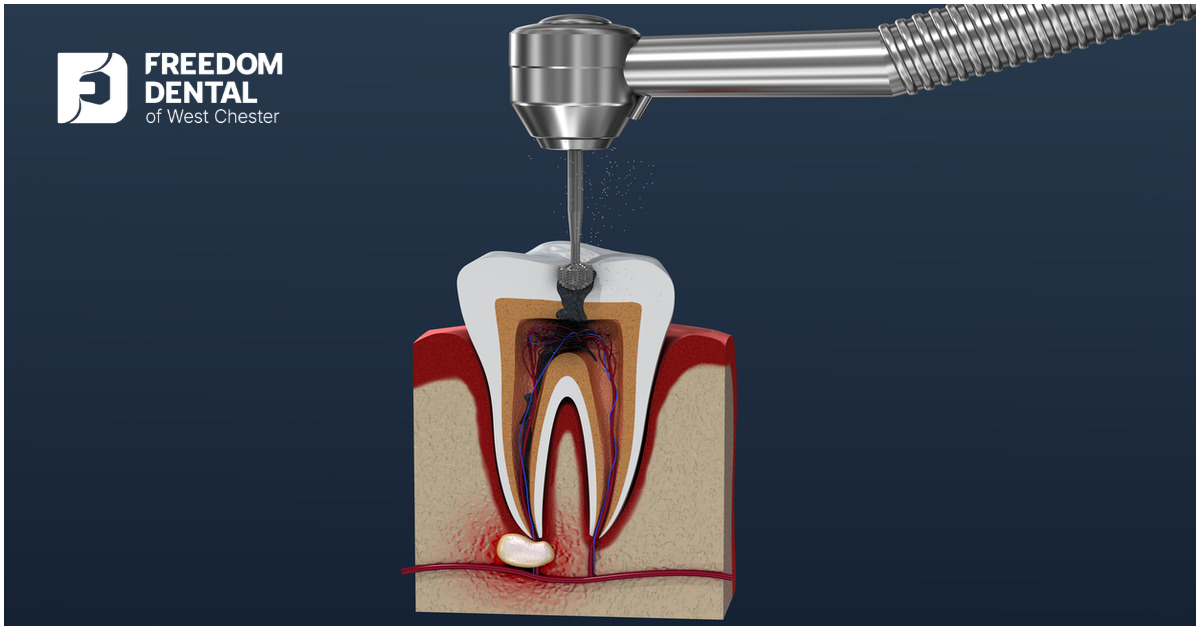
Once the tooth is numb, the dentist places a dental dam around it. This small protective barrier keeps the area dry and helps isolate the tooth during the procedure. Then a small opening is made in the top of the tooth so the dentist cleans out the infected pulp from the pulp chamber and root canals.
After that, the dentist cleans, shapes, and disinfects the canals. This is the part that can take time, especially in back teeth with three or four canals or in teeth with multiple roots. Once cleaned, the canals are filled with a material called gutta percha to seal the space inside of the tooth. In some cases, a temporary filling is placed until a permanent restoration can be completed.
A lot of people specifically want to know whether they can have a root canal done in one visit. The answer is yes, often. Many patients can complete root canal treatment in one visit, especially if the infection is limited and the tooth anatomy is relatively simple.
Still, one visit is not always the right call. Some teeth benefit from two appointments, particularly if the infected tooth has active drainage, a lot of inflammation, or complicated canals. In these situations, the first visit may include cleaning the canals and placing medication inside the tooth, followed by a temporary filling. At the follow up visit, the dentist confirms the infection has settled and then completes the treatment.
Neither approach is automatically better. A single visit can be convenient, but two appointments may be smarter for a more complex case. The dentist’s expertise matters here. Choosing the right pace can help prevent reinfection and improve long term stability.
Usually, yes. Front teeth often have one canal and one or two roots at most, which makes them simpler to treat. Because of that, front teeth typically require less chair time than molars.
Back teeth are a different story. Molars do the heavy lifting when you chew, and their internal anatomy reflects that. They often contain three or four canals and multiple roots, which means the root canal procedure can be more detailed. If you picture a front tooth like a straight hallway, a molar is more like a house with extra rooms and tight corners. That difference alone affects how long does a root canal take.
Tooth structure also plays a role. If the crown of the tooth is heavily damaged, if there is a previous filling in the way, or if the dentist needs to work around cracks or decay, the procedure may take longer. Every treated tooth has its own story.
This is one of the biggest fears people bring into the room. The phrase root canal has a reputation it does not fully deserve. Today, root canal treatment is much more comfortable than many people expect.
During the procedure, local anesthesia and local anesthetic techniques are used to numb the soft tissue and tooth. If the area is very inflamed, it can sometimes take a little extra time to get fully numb, but the goal is always to minimize discomfort. For most patients, the actual root canal procedure does not feel sharp or dramatic. It feels more like pressure and time in the chair than real pain.
Afterward, mild soreness or mild discomfort is common for a few days. The tissues around the root can be tender, especially if the infected tooth was painful before treatment. Many patients manage this with over the counter medication and return to normal activities quickly. If you have been wondering whether a root canal hurt means something went wrong, not necessarily. Some mild soreness is normal as the area settles.
What is not normal is persistent pain that worsens instead of improves. If that happens, you should contact your dentist for follow up.
Recovery time is usually shorter than people expect. Most patients return to normal activities the same day or the next day. In fact, patients return to work, school, and errands pretty quickly once the numbness wears off.
That said, recovery time depends on how much infection and inflammation were present before treatment. A tooth that was left untreated for a long time may be more tender afterward. If the infection had spread beyond the inside of the tooth, the surrounding soft tissue and bone may need longer to calm down. A severely infected tooth can require a little more patience.
Chewing habits also matter. If a temporary filling is in place, your dentist may recommend soft foods and avoiding chewing on that side until the permanent restoration is completed. That simple step can prevent further damage and protect the treated tooth while it heals.
Most patients notice that the original pain from the infected pulp starts to fade quickly, even if there is some mild soreness afterward. That is a good trade. The pain from infection is often deep, throbbing, and exhausting. The soreness after treatment is usually manageable and temporary.
A root canal procedure does not always mark the very end of treatment. In many cases, the tooth needs a permanent restoration afterward, often a crown. This is especially common for back teeth because they absorb a lot of bite pressure and need protection for long term success.
If a temporary filling was placed after the canals were sealed, you may come back for a final restoration. That does not mean the root canal takes longer in one sitting. It means the overall treatment plan includes protecting the tooth structure after the infection has been removed.
This step matters. A root canal saves the natural tooth, but the tooth can become more brittle over time if it is not restored properly. A crown can help support long term stability and reduce the risk of fracture or tooth loss. If you want to learn more about restorative options after endodontic care, the team’s page on crowns and caps is a helpful next step.
Absolutely. When infection is caught early, root canal treatment is often simpler. When a problem is ignored, the inside of the tooth can become more inflamed, more infected, and more difficult to treat.
An infected tooth does not usually fix itself. The pulp contains nerves, blood vessels, and connective tissue. Once that infected pulp is damaged beyond repair, leaving it untreated can allow bacteria to spread deeper into the root canals and surrounding tissues. That may lead to swelling, abscess formation, more pain, and a more time consuming procedure.
Delaying care can also increase the risk of tooth loss. In some cases, a tooth that might have been saved with a root canal may later require removal. If you are weighing whether treatment is worth it, this article on whether a damaged tooth can still be saved offers useful context.
Modern dentistry has changed the experience of root canal care in a big way. Advanced tools, better imaging, improved local anesthetic techniques, and more refined treatment methods all help make the procedure more predictable.
That does not mean rushed. It means efficient in the right way. Your dentist cleans the canals carefully, checks the shape and depth, removes infected tissue, and seals the root system with precision. The goal is not just to finish. The goal is to protect your oral health and preserve the natural tooth whenever possible.
At a practice that emphasizes total health and personalized care, patients are not treated like numbers on a schedule. Many patients feel calmer simply because the process is explained clearly. When you know what is happening and why, the appointment feels more manageable.
If you are dealing with tooth pain right now and need prompt care, it may also help to review the office’s emergency dental treatment options. Acting quickly can make a real difference.
After your root canal, your mouth may stay numb for a few hours. Once that wears off, you may notice mild discomfort when biting or touching the area. This usually improves over the next few days.
You should follow any follow up instructions closely, especially if you have a temporary filling or need a second appointment. Avoid chewing hard foods on the treated side until your dentist says it is safe. Stick with soft foods if the area feels tender. Keep the area clean, maintain your normal brushing and flossing habits, and watch for anything unusual.
Call your dentist if you experience swelling that increases, a bite that feels very off, or persistent pain that does not improve. A follow up visit may be needed to check healing or complete the final restoration.
So, how long does a root canal take? In many cases, about 60 to 90 minutes. Some appointments are shorter, some stretch closer to two hours, and some cases require two appointments instead of one visit. The timing depends on the tooth location, the number of canals, the amount of infection, and whether the tooth needs additional restoration afterward.
The better question may be this: what gives your tooth the best chance to heal and last? A well-planned root canal procedure can relieve pain, remove infection, and save a natural tooth that might otherwise be lost. For patients in West Chester and the surrounding Cincinnati area, that means getting care that is thorough, modern, and centered on long term results.
If you have tooth pain, sensitivity, or signs of infection, do not wait for the problem to get louder. Root canal treatment is often far more manageable than people imagine, and getting answers early can save you time, discomfort, and more extensive treatment later.